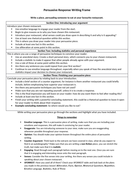
· Persuasive writing worksheets year 8 - To notice the image more obviously in this article, you are able to click on the wanted image to see the picture in its original dimensions or in full. A person can also look at Persuasive Writing Worksheets Year 8 image gallery that all of us get prepared to locate the image you are searching for The following 2 page handout introduces students to the persuasive writing component of the Writing strand of the Language Arts Ontario Curriculum for Grades The first page of the handout: introduces the concept of persuasive writing and where students can find it in current media, everyday li 25 Prompts for Persuasive Writing for Older Kids. Here are 25 writing persuasive prompts for students aged 11 to If you’re looking for 7th grade and 8th grade writing prompts particularly, these are for you! Mobile phones should be allowed to be used in the classroom. It should be made mandatory to eat vegetables every day at blogger.comted Reading Time: 8 mins
Persuasive Writing Worksheets Year 8 - VIOLA INFO
In the previous article, we looked at planning responses. Before you write a response, it is really important that you plan out your responses. Persuasive and informative responses require you to present evidence and then discuss it to make your points. Persuasive writing is a form of non-fiction piece of writing that aims to convince the audience to agree with a specific argument. Persuasive writing involves presenting logical and cohesive arguments that employ strong, year 8 persuasive writing, relevant examples presented through carefully chosen words to convince a reader of your point.
Persuasive writing is a lot more common than you think it is. Persuasive writing is found in editorials, media reports, critical essays, and advertisements, year 8 persuasive writing, to name a few places. Persuasive writing is an essential method for presenting information to others. Which is why it is important that you develop strong persuasive writing skills early on. To do this, you must use convincing, relevant and strong evidence to build your case.
This means you must be able to search for a variety of facts another pieces of information to support your argument.
These different types of sources have different purposes and audiences. For example, a research article will intend to inform their audiences whereas an opinion piece will try to persuade the audience.
By getting your information from a variety of sources, you can select and collate the ones that are most convincing for your argument. The more convincing your argument, the more persuasive your writing. Now that you have a list of evidence, it is time to select the most convincing, strong and reliable sources. This brings us to…. This is especially important in persuasive writing because you need to be able to select the most convincing arguments and evidence to support year 8 persuasive writing case.
When we talk about an argument being soundwe are discussing whether it has any flaws or holes, or if it is susceptible to counter-arguments, year 8 persuasive writing. You can employ critical thinking skills to test the soundness of your argument by asking the following questions:, year 8 persuasive writing. Asking these questions will compel you to think about your argument from different positions and challenge your ideas, year 8 persuasive writing.
if your ideas and argument withstand this questioning, then your argument will withstand a challenge. To write a persuasive piece, you have to use persuasive rhetoric to convince the readers to believe in your argument. Develop your Year 8 persuasive writing techniques and skills and boost your confidence with our Year 7 English Term Courses! Both persuasive and informative writing rely on you presenting evidence to support your points.
To do this effectively you want to use a consistent scaffold. The scaffold most students are used to is T. Year 8 persuasive writing T. scaffold is an approach to presenting evidence in a consistent, logical manner. Using the T. method consistently will help you learn to produce consistently persuasive arguments by presenting:. discussion and a process for employing it in your own writing. First, we need to have an example that uses a technique and creates a particular meaning in a text.
The example we will use is from chapter 3, year 8 persuasive writing. It is an observation made by Atticus Finch, the hero of the novel:. To convey this he says you need to literally inhabit their body.
Now we know the example, the technique, year 8 persuasive writing, and the meaning it is creating, we can put this into a response, year 8 persuasive writing.
When you write a response, the first thing you need year 8 persuasive writing do is orient the reader and let them know what you are talking about.
This means that when you present the technique, year 8 persuasive writing, you explain where it is from and why it is important. See how in the example above, the text is introduced and the reader orientated before the technique is introduced. What we need to do next is present the quotation. We want to try and use a full sentence and make the quotation part of our sentence. Note how in the example above the quotation has been used in the full sentence and is part of the grammar of the sentence.
There is no need to present it after a comma. To explain the meaning, we need to have another sentence that explains the meaning of this example and technique. You want this to be direct and concise. You can see how this response makes it clear what the quotation is discussing and how this develops meaning.
This is what you need to do with your responses. When you write a T. You could begin by introducing the example first.
As you can see, T. is a flexible method for presenting evidence in such a way that you are proving the point you are attempting to make. This means that you should not try to persuade your readers to agree with your argument, give an opinion or year 8 persuasive writing to convince them to do something. You should try to use these in your informative writing to make it sound more accurate and reliable.
When it comes to persuasive and informative writing, consistently using keywords throughout your whole piece will show the audience what ideas are important in your writing. Keywords in your informative or persuasive writing are often the words that capture your main ideas and are consistently used throughout your writing. Not only will it highlight your main ideas but it will tie your whole essay together and keep it consistent.
Find the main words that capture your argument. These can be directly from the question or your own. Drafting happens BEFORE you write your informative or persuasive piece of writing. You will get a chance to fix it later. This is when you revise your writing, reword sentences, restructure paragraphs, add or remove evidence and fix grammatical, punctuation and spelling errors.
Usually, students write one draft and settle with it. This is not good. In fact, it is a bad habit to get into. This will ensure that develop these skills early on to produce the best possible piece of writing.
Year 8 persuasive writing is important that your child continually develops good writing habits and consistently draft and edit their work. Here are some tips that you can use to help your child improve their persuasive and informative writing.
Knowing what mistakes students commonly make will help you spot them in your own work and help you avoid making them!
Persuasive writing- Episode 1 - What is Persuasive Writing
, time: 5:58Persuasive Writing Prompts for Writers aged 8 to 18 | Summer Boarding Courses
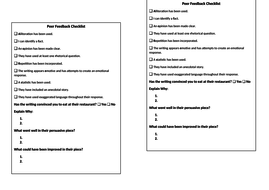
Anchor Paper A. Grade 8 Persuasive Exemplar Paper #5 Page 1. Grade 8 Persuasive Exemplar Paper #5 Page 2. Score Point 5. • This response focuses on the opinion that “this author is down right crazy” and presents insightful arguments on why students should not have to read at home · Year 8 persuasive writing. Different approaches to persuasive writing. In Year 9 English, you might come across a variety of persuasive essays. Sometimes, you may be asked to write a persuasive essay in response to moral or political question Persuasive Writing Prompts for Writers aged 8 to 18 Being able to state your ideas and offer evidence for your arguments is an excellent skill · Persuasive writing worksheets year 8 - To notice the image more obviously in this article, you are able to click on the wanted image to see the picture in its original dimensions or in full. A person can also look at Persuasive Writing Worksheets Year 8 image gallery that all of us get prepared to locate the image you are searching for

No comments:
Post a Comment